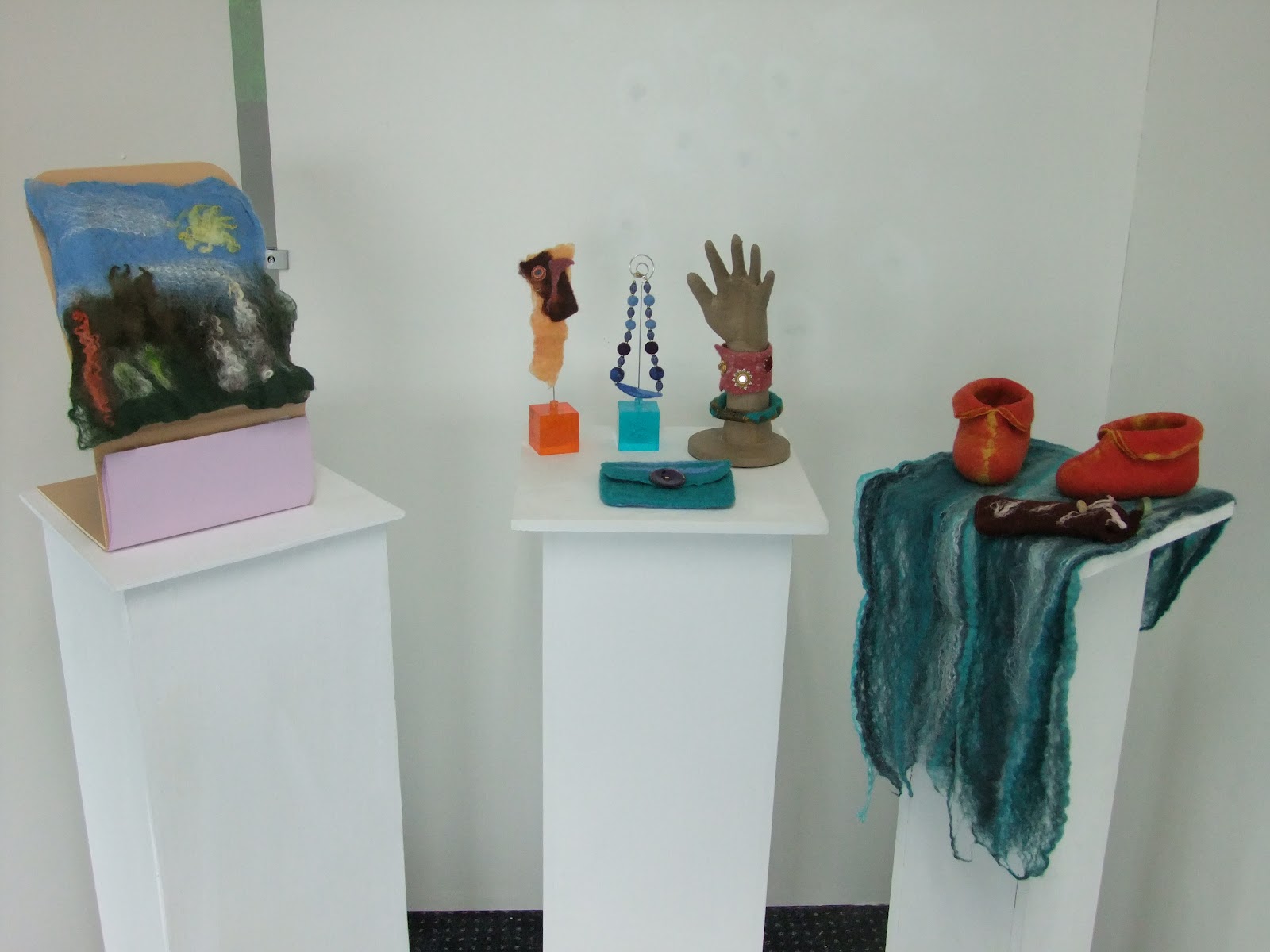
Particular highlights for me given my current interest in feltmaking were the beautiful cut-felt rugs, garments and of course the yurts. I also loved the amazing embroideries and hand-stitching, natural dyeing - well, all of it really!
Very briefly....
Khiva in Uzbekistan was the start of the journey. Jim mentioned a book by Christopher Aslan Alexander called Carpet Ride to Khiva. Definitely one for my booklist as the author worked with UNESCO to establish a successful natural dyeing, weaving and embroidery workshop there. For a wider read around the issues facing this area and how textiles have been integrated into the UNESCO initiative, this report makes a good read. Also, interestingly, I came across a great article in Turkey Red Journal about the dyers of the Khiva project (made even more interesting by the fact that the workshop was organised by two of my lovely dye suppliers, Kathy Hattori and Michele Wipplinger. Truly it is a small world!). Another great read for more info on the history of the area, local dyestuffs etc. (and Turkey Red Journal is a super free resource for anyone interested in textiles).

Suzanis
Traditional Uzbek embroideries - so detailed and intricate it takes your breath away.


Zarduzi - hand-stitched goldwork from Bukhara
Having done a tiny bit of goldwork and knowing how painstakingly slow it is, this exquisite suit was just so amazing. My photos are pathetically inadequate at capturing the quality of the workmanship and beautiful construction.


Hand-stitched hat - Osh


Fabulous felt - Amazing yurts!
I love a bit of felt-making but I can only imagine the time and work that goes into making a genuine yurt. When you consider that the starting weight of the fleece needed for a yurt is a staggering 500 kilos that ends up with 250 kilos of finished felt sheets, it makes my little felt bootees look pretty tame! What is particularly special about yurts is that not only is the fabric of the dwelling made of felt but much of the furniture and decoration will be textile-based, too, including screens, beds and bedding, doors, bags and, of course, rugs.
And speaking of rugs, here are some photos of amazing cut-felt rugs called Shyrdaks. Layers of thick felt are cut into traditional patterns. Both the cut-out and the outer fabric is retained so that two rugs can be made from a single design, one a positive image, one negative. The layers are then quilt-stitched (all by hand) to create the spongiest, warmest but sturdiest rugs imaginable. I'm very keen to try this technique (but maybe I'll start on a smaller scale!).


Oh, and before I leave yurts behind it was most interesting to learn that the tunduk or roof dome of the yurt features on the Kyrgyzstan flag.
 |
 |
This is just my quick snapshot. For the real deal, I'd strongly recommend curling up alone with your laptop/ipad and a nice hot cuppa/wine/something stronger and read the full story of this amazing journey - Prepare for a virtual journey that will warm any textile enthusiast's heart! Of course we'd all love to have done the journey ourselves, but if, like me, that's not likely to happen in this lifetime (I'm not ruling out other lifetimes), Jim and Diane's blog is the next best thing. Thanks to Jim for a great talk, for sharing some beautiful textiles and giving us a tantalising glimpse into the lives of the makers and their stories (and for the printing blocks and antique natural dyed fabric that might just have found their way into my essential textile hoard for future use!).